
The reality of commercial property management is that owning a facility comes with immense, unrelenting financial pressure. You are constantly balancing the physical maintenance of an aging structure with the sophisticated demands of modern tenants. When a building sits vacant or fails to command premium lease rates, the stress can be overwhelming. It is completely normal to feel paralyzed by the sheer scope of potential upgrades, wondering which improvements will actually move the needle on your asset’s valuation and which are merely cosmetic drains on your capital reserves.
The fundamental difference between a struggling property and a highly profitable one lies in the owner’s approach to capital improvements. Reactive management—waiting for a pipe to burst, a roof to leak, or a tenant to complain before taking action—destroys capital. It forces you to pay premium emergency rates and leaves you vulnerable to massive liability claims. Conversely, proactive, strategically planned upgrades drastically increase asset valuation, lower your annual insurance premiums, and dramatically improve tenant retention. When businesses look for a physical location, they are calculating their own operational efficiencies. A building that offers superior climate control, robust security, and a modern aesthetic directly contributes to their bottom line, making them willing to pay top-tier rates to occupy your space.
This guide is designed to provide you with a systematic, top-to-bottom blueprint for assessing and upgrading your facility. We will move past superficial interior decorating and focus on the structural, mechanical, and logistical upgrades that maximize your return on investment. From securing the exterior envelope against extreme weather to overhauling internal electrical grids for future technology, this comprehensive breakdown will help you transform your property into a highly competitive, lucrative asset in the modern real estate market.
Securing the Envelope: Protecting Your Investment from the Top Down
The primary defense of your building against the elements is its exterior envelope. If this perimeter is compromised, every subsequent interior upgrade you make is at risk of being destroyed by water intrusion, humidity, or structural rot. Securing the envelope is not the most glamorous part of property management, but it is unequivocally the most vital. You must approach your roof and exterior walls as active systems that require regular auditing and deliberate fortification.
-
Conduct Bi-Annual Weatherproofing Inspections: Flat and low-slope roofs are notorious for silent failures that can fester for months before manifesting as a massive leak in a tenant’s ceiling. You must inspect your membrane systems (whether TPO, EPDM, or modified bitumen) twice a year. Look specifically for ponding water, which degrades the membrane over time, as well as blistering, pulling at the seams, and flashing failures around HVAC curbs and parapet walls. If your roof is nearing the end of its lifespan, investing in high-quality commercial roofing is a non-negotiable priority to prevent catastrophic internal water damage. Furthermore, consider the ROI of installing reflective, cool-roof coatings. These white or light-colored elastomeric coatings reflect a significant portion of solar radiation, reducing the urban heat island effect around your property and drastically lowering the cooling costs for your top-floor tenants.
-
Seal and Protect Exterior Surfaces Proactively: The vertical surfaces of your building take a daily beating from UV radiation, wind-driven rain, and freeze-thaw cycles. Walk the perimeter and look for masonry spalling (where the face of the brick flakes off due to trapped moisture expanding as ice), cracking in stucco or exterior insulation and finish systems (EIFS), and the degradation of silicone sealants around window frames. To truly protect these surfaces, standard residential acrylics are insufficient. You need to utilize specialized commercial painting services that apply thick, flexible elastomeric coatings. These heavy-duty coatings are designed to bridge hairline cracks and stretch with the thermal expansion and contraction of the building, creating a monolithic, waterproof barrier that protects the structural steel and masonry block underneath.

Modernizing the Facade to Maximize Natural Light and Access
The exterior entry points of your facility dictate both its curb appeal and its functional utility. The facade is the first physical interaction a prospective tenant or customer has with your property. Upgrading the glazing and the access doors not only modernizes the aesthetic but also heavily impacts the building’s overall energy efficiency and logistical flow.
-
Upgrade Window Glazing for Thermal Efficiency: Single-pane glass or aging, failing double-pane windows are massive thermal liabilities. They allow heat to bleed out during the winter and bake the interior during the summer, forcing your HVAC systems to work in constant overdrive. Replacing outdated window systems using professional commercial glass services allows you to install low-emissivity (Low-E) insulated glazing units. These advanced windows have microscopically thin metallic coatings that reflect interior heat back inside during winter and bounce solar heat away during summer, all while allowing visible light to pass through. Additionally, upgrading your storefront systems with modern, laminated acoustic glass drastically reduces sound transmission. If your property is located near a busy highway or an industrial zone, creating a whisper-quiet interior environment is a major selling point for corporate offices and retail boutiques.
-
Install High-Cycle Access Points for Operational Flow: If your property includes warehousing, distribution space, or automotive facilities, the loading docks and drive-in bays are the lifeblood of the tenant’s operation. Aging, slow-moving doors cause massive bottlenecks, allow climate-controlled air to escape, and pose severe safety hazards. You should assess the daily cycle requirements of your logistics hubs. For facilities with heavy traffic, upgrading to high-cycle commercial garage doors is a strategic move. Look for insulated, rolling steel models featuring polyurethane injected cores, which provide exceptional R-values to maintain interior temperatures. Pair these with automated, smart-sensor operators that open quickly to accommodate forklifts and close immediately behind them, minimizing energy loss and preventing unauthorized access from pedestrians during busy operational hours.
Optimizing Traffic Flow and Perimeter Security
The exterior footprint of your property—the parking lot, the drive aisles, and the property line—is where liability and first impressions intersect. A poorly maintained lot full of potholes is not just an eyesore; it is a major trip-and-fall hazard that exposes you to devastating lawsuits. Optimizing how vehicles and pedestrians move through your site, and firmly establishing your boundaries, is crucial for liability mitigation and asset protection.
-
Redesign Parking Layouts for ADA Compliance and Drainage: Asphalt degrades due to UV exposure, vehicle weight, and poor water drainage. You must regularly assess your lot for signs of base failure, such as alligator cracking (interlocking web-like cracks) and deep potholes. Patching is a temporary band-aid; for a failing lot, you must bring in experienced commercial paving contractors to mill the old surface, address underlying drainage issues, and lay a fresh, structurally sound binder and topcoat. During this process, you must heavily scrutinize your layout for strict compliance with the Americans with Disabilities Act (ADA). This involves much more than just painting a blue wheelchair symbol. You must ensure the cross slopes of accessible parking spaces do not exceed 2%, that access aisles are wide enough for van ramps, and that curb cuts seamlessly transition from the asphalt to the sidewalk.
-
Define Boundaries with Automated Access Controls: Securing your property line does not mean you have to make your facility look like a maximum-security prison. The goal is to restrict unauthorized vehicular and pedestrian traffic while maintaining a welcoming appearance for legitimate visitors. By partnering with expert commercial fence installers, you can erect heavy-duty ornamental steel or aluminum perimeter barriers that offer the strength of chain-link without the industrial aesthetic. To truly optimize security, integrate these physical barriers with electronic gate operators, keypad entry systems, and RFID badge readers. For properties housing high-value outdoor inventory or sensitive data centers, installing crash-rated, anti-ram bollards at key access points prevents vehicles from breaching your secure perimeter.
Overhauling Internal Climate and Power Systems
The invisible heartbeat of your property consists of its heating, cooling, and electrical infrastructure. Modern businesses run on dense server racks, high-powered computing equipment, and complex machinery. If your building cannot provide clean, reliable power and maintain strict climate control, top-tier tenants will look elsewhere. Upgrading these internal systems is one of the most cost-intensive phases of property management, but it yields the highest return in tenant satisfaction and utility savings.
-
Implement Zoned Climate Control to Reduce Overhead: Relying on a massive, aging rooftop unit (RTU) to heat and cool an entire multi-tenant building is a massive financial drain. It results in hot and cold spots, where one tenant is freezing while another is sweltering, leading to constant complaints and wasted energy. The future of commercial air conditioning lies in decentralized, highly zoned control. Transitioning to Variable Refrigerant Flow (VRF) systems allows multiple indoor units to operate on the same exterior compressor, simultaneously heating one zone while cooling another by capturing and redirecting waste heat. Even if a full VRF overhaul is out of budget, installing smart, networked thermostats and variable frequency drives (VFDs) on your existing supply fans can give tenants localized climate control while drastically reducing your baseline energy consumption.
-
Audit Power Loads to Support Future Tech Integration: The electrical demands of modern commercial tenants are vastly different than they were even ten years ago. You must conduct a comprehensive energy audit of your main breaker panels, transformers, and subpanels. If your building is running on an outdated electrical service, you will not be able to support tech companies, modern medical facilities, or light manufacturing. Bringing in licensed commercial electrician companies is necessary to audit your total amperage draw, upgrade your main switchgear, and ensure you have clean, three-phase power available. Furthermore, you must future-proof your lot. Installing dedicated circuits for server rooms and pulling high-capacity wire to the parking lot to support Level 2 or DC Fast EV charging stations instantly elevates your property’s status and appeals to environmentally conscious corporate tenants.
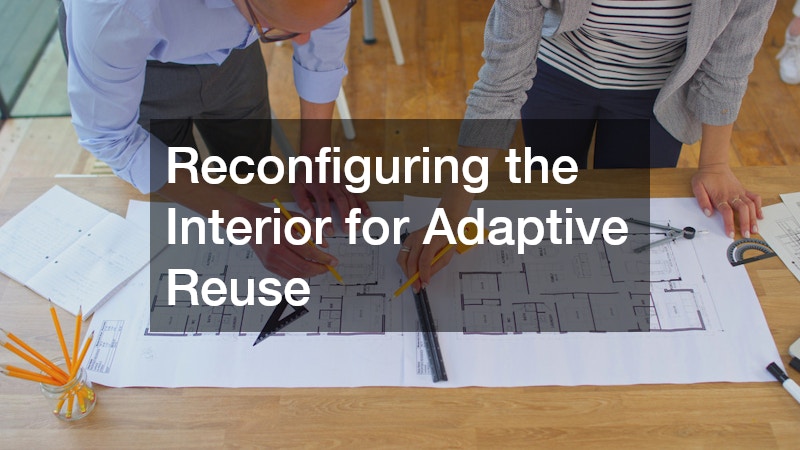
Reconfiguring the Interior for Adaptive Reuse
The layout of your interior spaces must be adaptable to survive the fluctuating real estate market. The days of dark, closed-off cubicle farms and rigid, single-use spaces are largely behind us. Modern tenants demand bright, flexible, open-concept environments that foster collaboration and can be easily reconfigured as their businesses scale. Undertaking a spatial transformation requires careful planning and a deep understanding of building codes.
-
Demolish Non-Load-Bearing Walls for Open Concepts: Transitioning from a maze of small, disconnected rooms to a bright, flexible workspace usually begins with selective demolition. Removing non-load-bearing partitions allows natural light from the exterior windows to penetrate deep into the core of the building. However, extensive commercial remodeling is never as simple as swinging a sledgehammer. When you fundamentally change a floor plan, you alter the building’s air circulation and fire safety dynamics. You will likely need to reroute HVAC ductwork to ensure the new open space is balanced correctly. You will also need to reconfigure the drop ceiling grid, upgrade the overhead lighting to energy-efficient LED troffers, and—crucially—relocate fire sprinkler heads to ensure every square foot remains compliant with municipal fire codes.
-
Partner with Experts for Code-Compliant Structural Changes: Any significant interior reconfiguration involves a major shift in liability. If you are adding new bathrooms to accommodate a larger headcount, moving plumbing stacks, altering primary egress routes, or modifying load-bearing columns, you cannot rely on a neighborhood handyman. You must partner with a highly reputable commercial building contractor. A professional general contractor handles the immense logistical burden of pulling municipal permits, scheduling specialized sub-trades (like plumbers and fire-suppression technicians), and managing the mandatory municipal inspections at each phase of the build. Attempting unpermitted work to save a few dollars upfront is a catastrophic risk; if a fire or structural failure occurs, your insurance provider will immediately deny the claim if they discover unauthorized, unpermitted alterations to the property’s core systems.
Securing Your Property’s Long-Term Value
Upgrading a commercial facility is a marathon, not a sprint. A complete top-to-bottom overhaul does not have to happen overnight, and trying to tackle every project simultaneously will only drain your capital and cause immense operational disruptions. The smartest path forward is a phased strategy. You must prioritize your upgrades based on life-safety liabilities first, structural integrity second, and aesthetic tenant demands third. By systematically addressing the building envelope, modernizing the mechanical systems, and optimizing the site layout, you transform a decaying structure into a high-performing financial asset.
To keep your upgrade strategy focused and effective, rely on this rapid-fire summary checklist:
-
Seal the Envelope: Prioritize roof inspections and heavy-duty exterior coatings to prevent devastating water intrusion.
-
Upgrade Thermal Glazing: Replace single-pane windows and slow logistics doors to maximize energy efficiency and operational flow.
-
Repair Liability Hazards in the Lot: Fix degraded asphalt, ensure strict ADA compliance, and establish secure perimeters to mitigate legal risks.
-
Modernize Climate and Power Control: Audit your electrical grid and install zoned HVAC systems to attract tech-forward, high-paying tenants.
-
Ensure Interior Layouts are Adaptable: Utilize permitted, professional contractors to create flexible, open-concept spaces that meet modern fire and building codes.
Stop viewing facility maintenance as an inevitable sunk cost to be minimized. Every time you fix a pothole, upgrade a breaker panel, or seal a roof, you are not just repairing a building; you are directly investing in the long-term profitability and prestige of your real estate portfolio. Approach your property with strategic vision, hire licensed professionals, and you will position your asset for sustained success in any market condition.
